
Live Chat
From Live Chat to the Call Center: Create a Seamless, Omnichannel Customer Journey Map

In today's retail and e-commerce ecosystem, consumers do not stick to a single channel when interacting with brands. A customer might click on an Instagram ad from their smartphone while commuting in the morning to view your product, visit your website during their lunch break and chat with your team via a live chat program for any questions, and feel the need to call your customer service directly in the evening to resolve a complicated return process. This scenario is a typical and highly natural behavioral model of the modern consumer. However, the vast majority of brands provide customers with a fragmented, exhausting, and inconsistent experience because they lack the background technological infrastructure to connect these different channels.
Omnichannel Customer Experience, the concept that marketing professionals and e-commerce managers must focus on the most, does not just mean opening an account on every platform. The real skill is enabling a customer to continue a conversation they started on one channel when they switch to another, without any disconnection, as if they are talking to a single person on a single screen. The most effective way to show your customers that you understand them, value them, and respect their time is by creating a flawless Customer Journey Map.
In this massive and comprehensive guide, we will examine how to connect the communication process for your e-commerce or digital service business—starting from the moment a visitor enters your website, extending to live chat, messaging apps, and ultimately an integrated call center—into a seamless line. You will learn step-by-step how to consolidate fragmented systems into a single hub using the innovative tools offered by the Qpien platform, and how to transform your customer satisfaction goals into lasting loyalty.
What is a Customer Journey Map and Why is it Vital in E-commerce?
A customer journey map is the visual or strategic documentation of all the stages a consumer goes through, from the moment they first notice your brand (awareness), to the purchase (conversion), the subsequent customer service support they receive (retention), and ultimately becoming a loyal advocate of the brand. In e-commerce, this map is directly related not only to which pages the user clicks on but also to the situations in which they resort to your customer communication channels.
The Destructive Impact of Fragmented Communication on Customer Experience
In traditional communication models, departments work in a "silo" mentality. The social media team handles Instagram DMs, the web team answers emails, and the call center team only takes phone calls. There is no instant data sharing between these teams.
The biggest problem created by this situation is the "re-explaining" issue. According to research by the Harvard Business Review, the customer service experience customers hate the most is having to repeat the same information over and over again when transferred to different agents or channels to get their problem solved.
A customer asks about the shipping status of a product via live chat on your website and receives the answer, "There is a system error, please call our call center." The customer dials the number, connects to the call center, and the agent asks them that dreadful question: "How can I help you? Could I get your order number from the beginning?" This scenario paints an image in the customer's eyes that your brand is technologically inadequate and lacks vision. As a result, the customer loses trust and never shops from that brand again. This is the biggest imperative behind businesses urgently migrating to omnichannel customer service management systems.
The Foundation Stones of the Omnichannel Customer Journey
To create a seamless experience map, your business needs to properly structure the communication touchpoints it uses. Every channel has a different purpose and a different customer psychology. A successful omnichannel communication management strategy relies on these channels working in synchronization.
The First Touchpoint: Proactive Live Chat on the Website
One of the most critical steps in the customer journey is those first few minutes when a user enters your e-commerce site. While the user is browsing products, looking at size charts, or adding items to their cart, a minor question (friction) popping into their mind can halt the purchasing process.
At this point, a well-designed Live Chat infrastructure comes to the customer's rescue. Engaging with visitors in real-time before they leave your website transforms them from passive visitors into active customers. A live chat tool empowered by AI automations can send proactive messages based on the page the user is browsing. For instance, a bot asking a user who has spent 30 seconds on the "Return Policy" page, "Hello, would you like to get detailed information about our 14-day unconditional return process?" instantly satisfies the customer's quest for trust.
Social Media and Messaging Apps: The Customer's Natural Habitat
The next step after live chat is to establish a presence in the customers' "natural habitats," namely platforms like WhatsApp, Instagram, and Facebook Messenger, where they spend hours every day. Even if the customer has left your site, they might prefer to ask their lingering question via WhatsApp. Thanks to an effective WhatsApp Business integration, the brand positions itself as a trusted "contact" in the customer's phonebook. This channel is worth its weight in gold for both post-sales support and future personalized marketing campaigns (broadcast messages).
The Resolution Center for Complex Issues: Cloud-Based Call Center
No matter how much digitalization increases, the sense of trust provided by the "human voice" never disappears. Especially in B2B sales, purchases with a high Average Order Value (AOV), or stressful moments of crisis requiring urgent resolution (wrong product delivery, cancellation/return disputes), customers want to hear a living, breathing representative on the other end rather than typing instant messages.
In the past, setting up call centers meant million-dollar projects requiring massive hardware investments (PBX systems, cables, servers). Today, a modern cloud-based call center software can be deployed in seconds with just an internet connection and a computer. The secret is that this call center is managed by the same brain as the live chat and WhatsApp.

How to Design a Seamless Transition from Live Chat to the Call Center?
Let's get to the operational and technological heart of the matter. When a customer wants to continue an issue they started via live chat or email by calling on the phone, how should the technology be designed to make this transition (handover) smooth? This is exactly where the power of an all-in-one platform like Qpien emerges.
Data Centralization with Smart Inbox
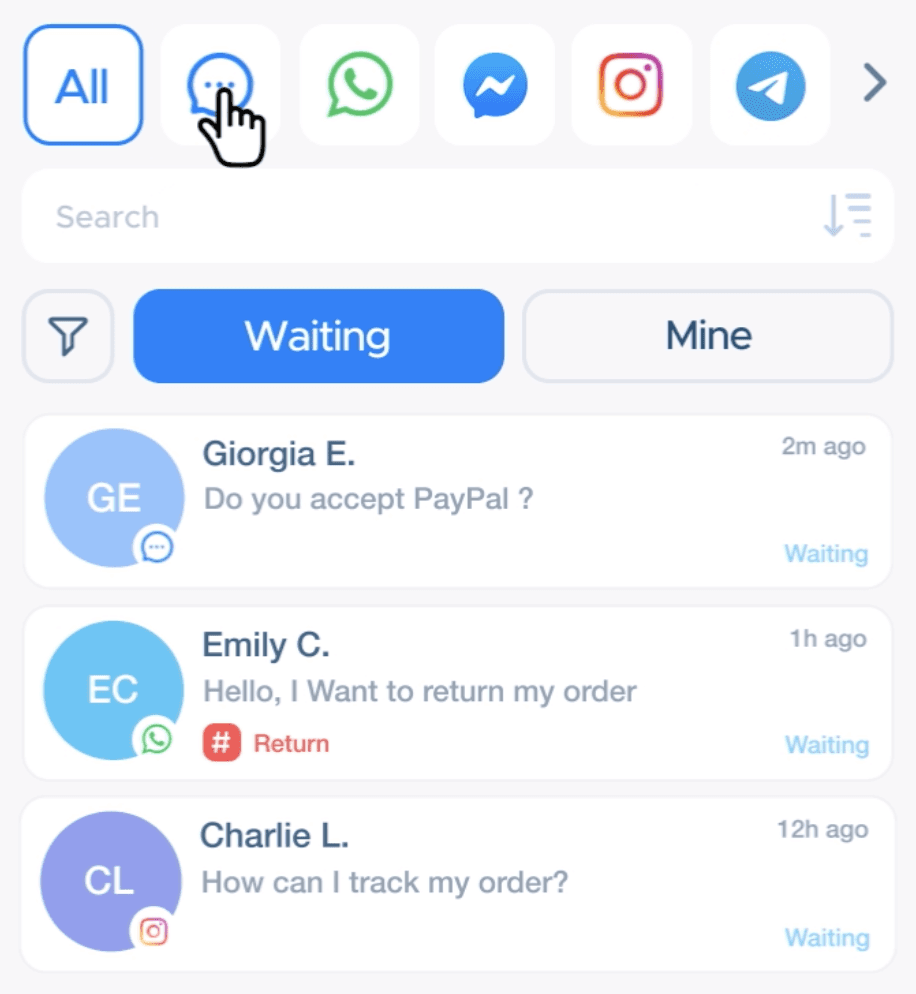
At the center of this entire seamless map lies the Smart Inbox. In the Qpien platform, live chat, social media messages, and call center interactions are all gathered in the same panel, on the same interface.
Scenario: A customer writes via Live Chat on your site at 2:00 PM: "I want to change the delivery address of my order, but the system isn't allowing it." Your live chat representative (or AI bot) reviews the situation, notes that the transaction requires voice confirmation for security reasons, and offers, "We can call you right away if you wish."
Seamless Transition: When the customer accepts, the representative clicks on the customer's number directly on the same Qpien screen and initiates an outbound call natively through the web browser.
Result: When the customer answers the phone, the representative says, "Hello Mr. Ahmet, I'm calling regarding the address change you mentioned in the live chat. Can we verify your new address?" The customer doesn't have to explain their problem from the beginning; the transition between systems is so flawless that the customer is amazed by your brand's professionalism.
This infrastructure pushes your First Contact Resolution (FCR) rates to incredible levels while minimizing your Customer Effort Score (CES).
IVR Automations and Smart Call Routing
When a customer calls your brand directly, routing incoming calls to the right departments is crucial for saving time. With the Call Center features within the Qpien platform, you can build customizable Interactive Voice Response (IVR) trees without needing any code.
An IVR structure like "Press 1 for order status, 2 for return and cancellation processes, and 3 to connect to a customer representative" filters calls automatically. If the customer's number matches via Qpien's e-commerce integration, the customer's recent orders, shipping status, and past WhatsApp conversations begin to appear on the screen of the representative answering the phone before the customer even says "Hello." This context richness transforms your call center operations into a department that not only solves problems but provides superior service.
Call Recording, Transcripts, and Quality Assurance Processes
One of the biggest advantages of the omnichannel customer journey is institutional memory. When not just written texts but also voice calls are conducted through Qpien, call recordings and AI-supported voice-to-text (transcripts) conversions are automatically processed into the system.
If a different customer representative enters this customer's profile tomorrow, they will see the live chat message sent on Monday, the audio recording of the 4-minute phone call made on Wednesday, and the invoice sent via email on Friday, all listed chronologically on a single screen. This transparency is an unmatched management tool for source control, quality assurance (QA), and performance analysis.
Steps to Build a Successful Omnichannel Customer Journey Map
Do not let preparing your business for this massive integration intimidate you. With platforms featuring user-friendly interfaces (No-Code) like Qpien, you can initiate this process in minutes. However, the operational steps must be taken correctly beforehand:
Step 1: Identify and Connect All Touchpoints First, list all the channels through which your customers can reach you. Identify not only the channels you are aware of but also the ones forgotten in the background.
The current contact form on your website.
Your old call center number.
Instagram and Facebook DMs.
Marketplace questions from platforms like Trendyol and Hepsiburada.
Complete the integration of all these channels into the Qpien Smart Inbox via API or direct connection paths. This way, you connect all your "nerve endings" in the digital world to a single brain.
Step 2: Optimize Customer Expectations for Each Channel The Service Level Agreement (SLA) expectation for response time varies for each channel. While a customer might consider a 12-hour response time to an email normal, they want an answer within the first 1-2 minutes when they write via Live Chat or WhatsApp. In a call center, they expect to hear the IVR (Interactive Voice Response system) the moment the phone rings.
Optimize these times with automation rules and ready-made reply templates on the Qpien platform. Deploy 24/7 AI-based bots in live chat, and design routings that reduce wait times in the call center. Exceeding expectations breeds loyalty.
Step 3: Bring Representatives Together on a Single Platform (Cockpit) For the omnichannel structure to succeed, it is essential that the human factor enjoys using this tool. Completely forbid customer representatives from opening different tabs or directing customers to other sites to check shipping statuses. Declare the Qpien interface as your company's "Customer Communication Cockpit."
Let representatives monitor your e-commerce site's product inventory, order details, shipping processes, and customer communication history solely through the Qpien panel. Eliminating screen transitions (zero context-switching) will reduce your employees' stress and give them a true vision for customer complaint management.
Remove Boundaries in Your E-commerce Ecosystem with Qpien
When you eliminate all the technological difficulties a customer experiences while transitioning from written to verbal channels (or vice versa), your business goes far beyond price competition and becomes an "experience brand."
If you want to protect your brand's reputation, increase your conversion rates, and keep support costs at reasonable levels; you must immediately get rid of independent tools, disconnected software, and unintegrated traditional call center systems.
The Seamless Communication Investment that Increases Sales (ROI)
The ultimate goal of all technological investments is to increase profitability. When you create a seamless customer journey map:
Your cart abandonment rates drop significantly thanks to the proactive approach in live chat.
Your store rating skyrockets and your visibility increases thanks to marketplace integrations.
You completely eliminate hardware costs thanks to integrated cloud call center software.
Most importantly, a customer who receives hassle-free service once will shop directly by typing your site's address for their next purchase instead of clicking on ads. Customer Lifetime Value (CLTV) is organically maximized.
Build the customer service standards of the future today. The customer journey is not a process that ends simply with the purchase of a product; it is a living organism that starts with product discovery, continues with support requests, and becomes cyclical with repurchases. When you put seamless communication at the heart of your e-commerce operations, you create an active force that adds value to your brand and drives sales, not just a department that solves problems.
Taking your business beyond its era—managing live chat, WhatsApp, email, social media, and an advanced IVR-supported call center from a single screen with the assurance of artificial intelligence—is not as complicated or expensive a process as you might think. To establish this entire omnichannel ecosystem in your business within minutes and perfect your customer interactions, visit the Qpien homepage right away. Try Qpien for free for 14 days to meet the technology that removes boundaries and to create a permanent revolution in your customer service process! Empower your teams, increase your sales, and give your customers that seamless journey they deserve.

